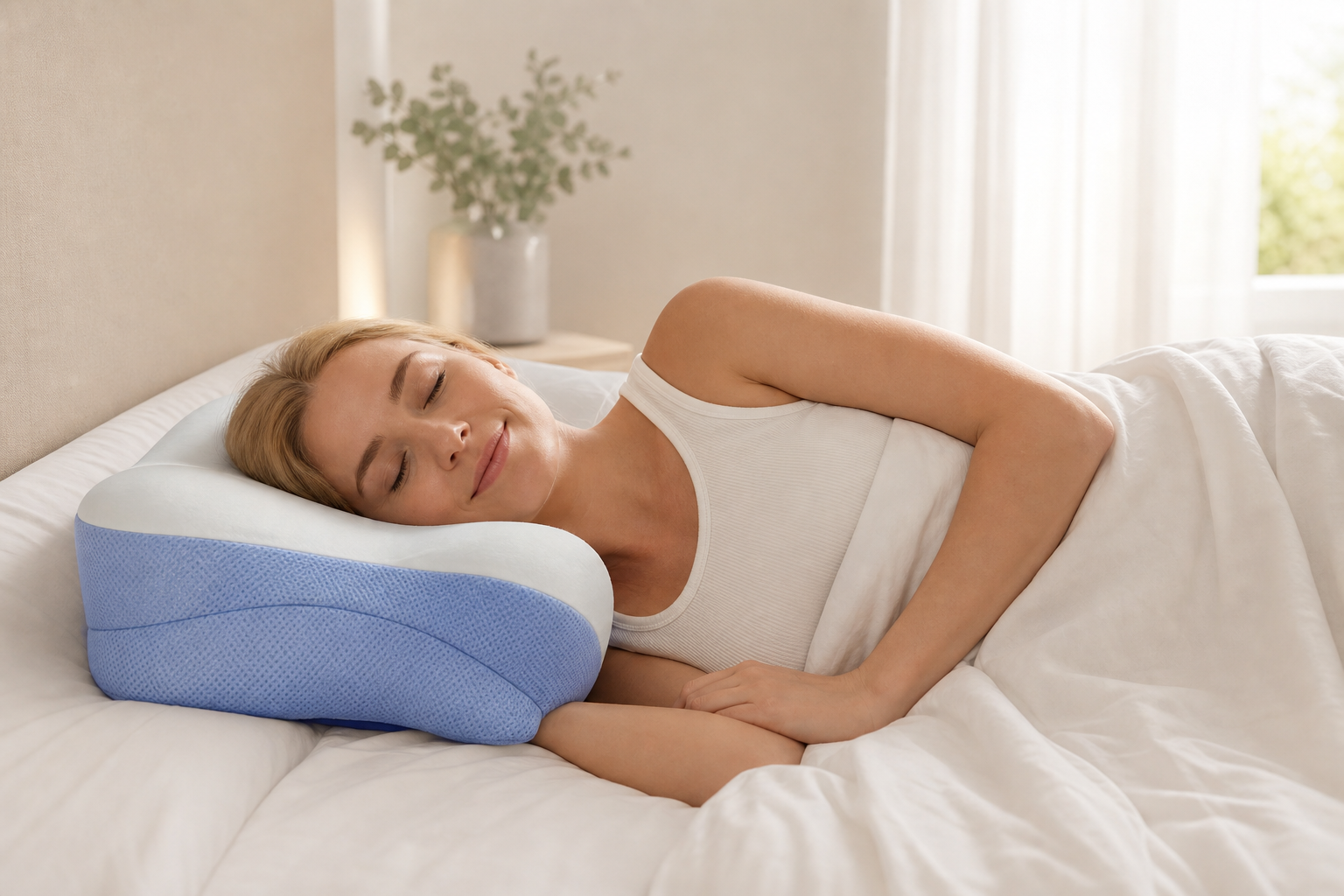
Best Pillows for Neck Support: How to Choose the Right Shape, Loft, and Firmness
The best pillow for neck support is not always the softest pillow, the tallest pillow, or the most expensive pillow. It is the pillow that helps keep your head, neck, and spine in a more neutral position for your body and sleeping style.
That is why one person can love a firm contour pillow while another prefers an adjustable shredded foam pillow. Neck support depends on sleep position, shoulder width, mattress firmness, pillow loft, material, and how much structure you like under your head.
What neck support really means
Neck support is about reducing awkward angles during sleep. When your pillow is too low, your head may drop toward the mattress. When it is too high, your head may bend upward. When it is too soft, it may feel comfortable at first but collapse during the night.
A supportive pillow should help fill the space between your head and the mattress without forcing your neck into an extreme angle.
Side sleepers: fill the shoulder gap
Side sleepers usually need the most pillow height. When you lie on your side, your shoulder creates space between your head and the mattress. A pillow that does not fill this gap can leave your neck tilted downward.
Look for:
- Medium to high loft.
- Medium-firm or firm support.
- Contoured shape or shoulder-friendly design.
- Memory foam, latex, or adjustable fill.
People with broader shoulders often need more loft than people with narrow shoulders. Mattress firmness matters too: on a firm mattress your shoulder sinks less, so you may need a taller pillow.
Back sleepers: support the natural curve
Back sleepers usually need moderate loft. The goal is to support the curve of the neck without pushing the chin toward the chest. A pillow that is too tall may feel supportive at first but can create forward head posture during the night.
Look for:
- Medium loft.
- Soft-medium to medium firmness.
- Neck roll or gentle contour.
- Memory foam or latex that holds shape.
A good back sleeper pillow often has a lower head cradle and a slightly raised neck area.
Combination sleepers: consider adjustability
If you switch between side and back sleeping, you need balance. A very high side-sleeper pillow may feel uncomfortable when you roll onto your back. A low back-sleeper pillow may not support your side-sleeping position.
Adjustable shredded foam pillows can work well because you can remove or add fill. Some ergonomic contour pillows also aim to support both side and back sleeping through different zones.
Materials that matter
Memory foam
Memory foam molds to the shape of the head and neck. It can provide stable, consistent support, especially in contour pillows. The downside is that some memory foam sleeps warm or feels too firm for people who like plush pillows.
Latex
Latex is more responsive and springy than memory foam. It often sleeps cooler and holds shape well. It can be a strong option for people who want support without a slow-sinking feel.
Shredded foam
Shredded memory foam or latex allows more airflow and adjustability. You can often change the loft by adding or removing fill.
Down and down alternative
These pillows can feel soft and luxurious, but they may collapse too much for people who need firm neck support. They may work better for people who prioritize softness over structure.
Ergonomic and contour pillows
Ergonomic pillows use shape to guide support. Common designs include cervical rolls, center head cradles, side wings, shoulder cutouts, and butterfly contours. These designs can be useful for people who feel that regular pillows flatten or shift during the night.
However, contour pillows are personal. Some people love the guided feel. Others find it too structured. Give yourself a few nights to adapt before judging.
Signs your pillow may not be right
- You wake up with a stiff neck often.
- You fold your pillow to make it taller.
- You stack two pillows but still feel unsupported.
- Your head tilts noticeably up or down when side sleeping.
- Your pillow looks flat or lumpy.
- You toss and turn trying to find a stable position.
Quick buying checklist
Before buying a pillow for neck support, ask:
1. Do I sleep mostly on my side, back, stomach, or a mix?
2. Do I need more loft because of broad shoulders?
3. Does my mattress let my shoulder sink in?
4. Do I prefer firm structure or soft plushness?
5. Do I sleep hot?
6. Can I return the pillow if it does not fit?
Bottom line
The best pillow for neck support is the one that matches your body and sleep position. Side sleepers generally need higher, firmer support. Back sleepers usually need moderate support with a gentle neck contour. Combination sleepers benefit from adjustability or multi-zone ergonomic designs.
If your current pillow collapses, shifts, or leaves your neck unsupported, an ergonomic memory foam pillow may be worth comparing.
Compare an Ergonomic Pillow Option