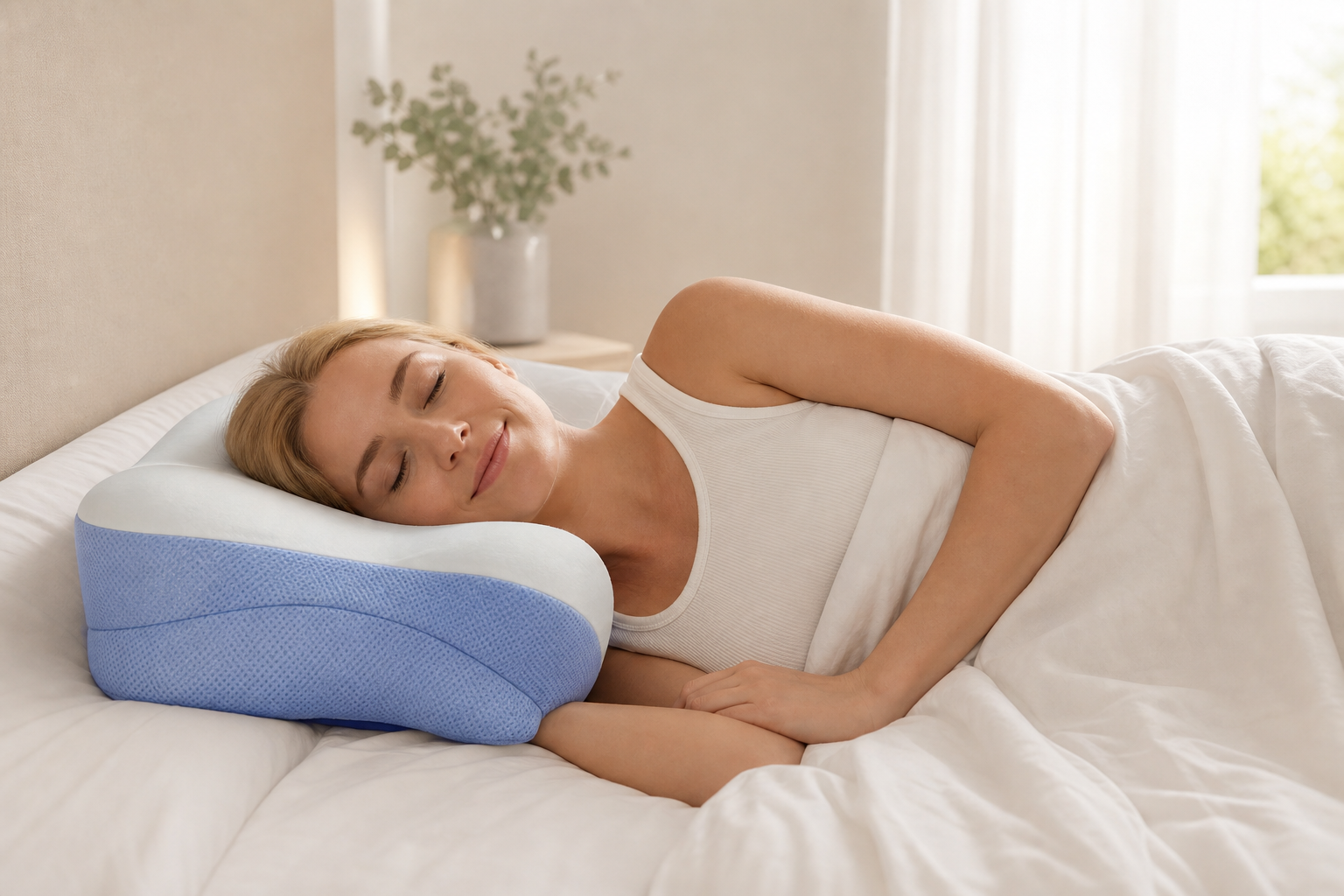
How to Choose an Ergonomic Pillow: A Simple Guide for Side and Back Sleepers
Choosing an ergonomic pillow is less about finding the trendiest pillow and more about matching support to your sleeping position. The right ergonomic pillow should help your head, neck, and shoulders feel supported without forcing your body into an awkward angle.
If you are comparing contour pillows, memory foam pillows, cervical pillows, and adjustable pillows, this guide will help you understand what actually matters.
Start with your sleep position
Your sleep position is the biggest factor in choosing pillow height and shape.
Side sleepers
Side sleepers usually need a pillow that fills the gap between the shoulder and the head. If the pillow is too thin, the head tilts down. If it is too thick, the head tilts up. Both can feel uncomfortable over time.
Side sleepers often do best with medium-high loft, medium-firm support, and a shape that makes room for the shoulder.
Back sleepers
Back sleepers need support under the neck without pushing the head too far forward. A moderate loft pillow with a gentle cervical contour can help support the natural curve of the neck.
Back sleepers often do best with medium loft and a balanced firmness.
Stomach sleepers
Stomach sleepers usually need very low loft. Many ergonomic contour pillows are too tall for stomach sleeping because the neck is already rotated to one side. If you sleep mostly on your stomach, be cautious with high contour pillows.
Understand loft
Loft means pillow height. It is one of the most important features.
- Low loft: often best for stomach sleepers or very soft mattresses.
- Medium loft: often best for back sleepers and some combination sleepers.
- High loft: often best for side sleepers, especially with broader shoulders.
Your mattress changes the equation. A softer mattress lets your shoulder sink more, which can reduce the loft you need. A firmer mattress keeps your shoulder higher, which may require a taller pillow.
Choose the right firmness
A pillow can be high but too soft. If it collapses quickly, it may not support your head through the night. A pillow can also be firm but too high, forcing your neck upward.
For ergonomic support, many people prefer medium-firm. It provides structure without feeling like a block. However, comfort is personal. If you dislike firm pillows, consider an adjustable shredded foam option.
Compare pillow materials
Solid memory foam
Solid memory foam is common in contour pillows. It holds a specific shape and molds under pressure. This is good for consistent support, but it may feel warmer and firmer.
Shredded memory foam
Shredded foam is adjustable and more breathable. You can often remove fill to change loft. It feels less sculpted than a solid contour pillow.
Latex
Latex is responsive and supportive. It usually does not have the slow sink of memory foam. It can be a good option for people who want support with more bounce.
Hybrid fills
Some pillows combine foam, fiber, or cooling materials. These can be comfortable, but look carefully at whether they provide enough structure for your sleep position.
Evaluate the shape
Ergonomic pillows may include:
- A center cradle for the head.
- A neck roll or raised cervical area.
- Side wings for side sleeping.
- A shoulder cutout.
- A butterfly contour.
- A lower and higher side for different preferences.
A more shaped pillow can feel supportive, but it also gives you less freedom to move. If you toss and turn constantly, choose a design that supports multiple positions.
Think about heat and breathability
Memory foam can retain heat. If you sleep hot, look for breathable covers, ventilation, gel-infused foam, latex, or shredded foam. A cooling pillow is not only about comfort; overheating can make you move more, which can disrupt pillow support.
Give it an adjustment period
If you have used a flat or collapsed pillow for years, an ergonomic pillow may feel unusual at first. Your body may need several nights to adapt to a more structured shape. That does not mean you should force discomfort, but do not judge the pillow after only one minute on the bed.
Red flags when shopping
Be careful with products that promise to cure pain, fix sleep instantly, or work for every person in every position. Good pillows can support comfort and alignment, but no pillow is universal.
Also look for a clear return policy. Pillow comfort is highly personal, and even a well-designed pillow may not fit your body.
Bottom line
To choose an ergonomic pillow, start with your sleep position, then match loft, firmness, material, and shape. Side sleepers usually need more height and structure. Back sleepers usually need a moderate contour. Combination sleepers need flexibility. Stomach sleepers should be cautious with tall contour pillows.
The goal is simple: a pillow that supports your head and neck in a comfortable, natural position through the night.
See an Ergonomic Pillow Example