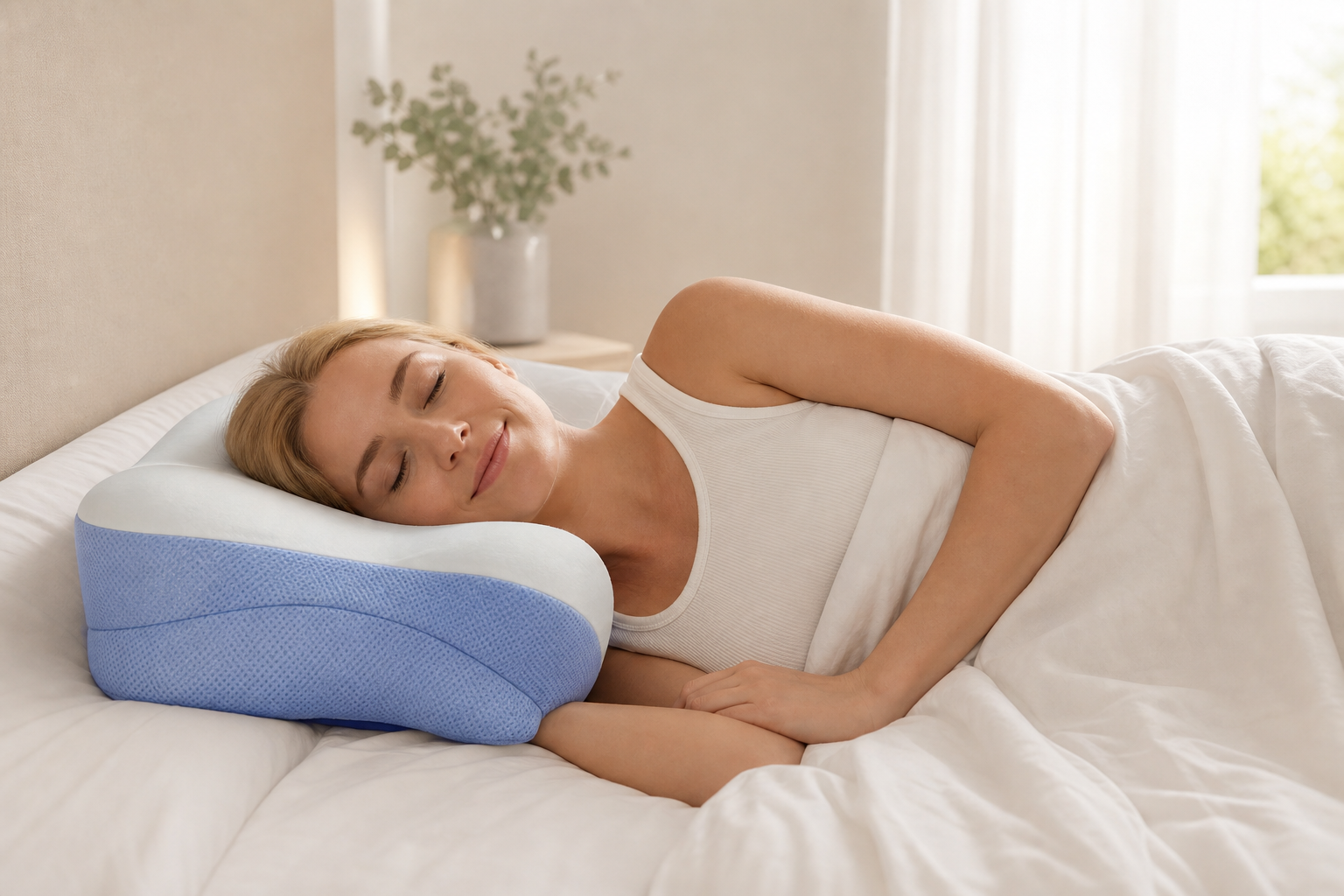
Side Sleeper Pillow Guide: How to Support Your Neck, Shoulders, and Spine
Side sleeping is one of the most common sleep positions, but it creates a simple challenge: your shoulder lifts your body away from the mattress, leaving a gap between your head and the bed. The job of a side sleeper pillow is to fill that gap without pushing your head too high.
If your pillow is wrong, your neck may tilt all night. If it is right, your head and spine feel more level and supported.
The side sleeper gap
Lie on your side and imagine a straight line from the center of your head through your neck and spine. That is the alignment a pillow is trying to support. A thin pillow can let your head drop. A tall pillow can push your head upward. A soft pillow can start tall but collapse by morning.
This is why side sleepers often search for high loft pillows, firm pillows, ergonomic pillows, shoulder cutout pillows, and memory foam contour pillows.
Loft: the most important factor
Loft means pillow height. Side sleepers typically need medium-high to high loft. But the exact height depends on your shoulder width and mattress.
You may need more loft if:
- You have broad shoulders.
- Your mattress is firm.
- Your head tilts downward on your current pillow.
- You place your hand under the pillow for extra height.
You may need less loft if:
- Your mattress is soft and your shoulder sinks in.
- Your head feels pushed upward.
- You wake up with pressure under the jaw or ear.
Firmness: support that lasts through the night
Side sleepers often do better with medium-firm or firm pillows because the pillow needs to hold the head up. Very soft pillows may feel nice at first but flatten over time.
A supportive pillow should compress enough to feel comfortable but not so much that your neck loses support.
Best materials for side sleepers
Memory foam
Memory foam can work well because it molds to the head and neck while maintaining structure. A solid memory foam contour pillow may feel more guided. Shredded memory foam may feel more flexible and adjustable.
Latex
Latex is springier than memory foam and often sleeps cooler. It can provide strong support without the slow-sinking sensation.
Adjustable fill
Adjustable pillows are useful because side sleeper needs vary widely. You can remove or add fill until your head feels level.
Down or feather
Down pillows can feel luxurious but are often too soft for reliable side-sleeper support unless they are very full or specially designed.
Ergonomic shapes for side sleepers
Side sleepers may benefit from shapes that make room for the shoulder or support the neck more directly. Common options include:
- Crescent-shaped pillows.
- Shoulder cutout pillows.
- Cervical contour pillows.
- Butterfly-shaped pillows.
- Higher side edges with a lower center.
The goal is not a fancy shape. The goal is a shape that supports your head while letting your shoulder rest naturally.
Signs your side sleeper pillow is not working
Your pillow may not be right if:
- You wake up with neck stiffness often.
- Your shoulder feels compressed.
- You fold your pillow every night.
- You stack two pillows but still feel unstable.
- Your head tilts up or down when lying on your side.
- You constantly flip or punch the pillow into shape.
Extra side sleeping tips
A pillow between the knees can help keep the hips more aligned. Hugging a pillow can reduce shoulder rounding for some people. Try not to tuck your arm directly under your head, because that can create shoulder pressure and reduce circulation.
Your mattress matters too. A very firm mattress may create more shoulder pressure, while a very soft mattress may change how much pillow height you need.
Should side sleepers use contour pillows?
Many side sleepers like contour pillows because they provide a consistent shape instead of collapsing. However, contour pillows are personal. If the height is wrong for your shoulder width, it may not feel right. Choose a contour pillow that matches your body and offers a return policy when possible.
Bottom line
A good side sleeper pillow should fill the shoulder-to-head gap, keep your neck more neutral, and maintain support through the night. Look for the right loft, medium-firm support, and a material that keeps its shape. If regular pillows keep collapsing or forcing you to adjust all night, an ergonomic side sleeper pillow may be worth comparing.
Compare a Contour Pillow for Side Sleepers